 15:2615:2611:2814:5840:5220:39
A trash can cleaning business washes and sanitizes people's garbage bins on a schedule, usually for $15–25 a month. You can start with a pressure washer and a pump sprayer, sell subscriptions street by street, and buy a trailer rig only once your routes are full.
 Facebook group or on
 Nextdoor asking who would pay to have their trash cans cleaned and sanitized, and offer the first few a free clean if they share it with their neighbours.
No equipment needed yet. If people reply, do the first cans with a hose, a brush and a pump sprayer.  04:47
 04:56
 03:28
Each clip opens at the exact moment on YouTube.
15:26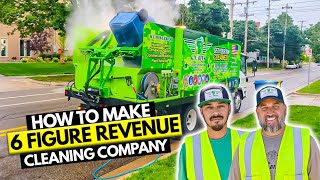 03:1303:14
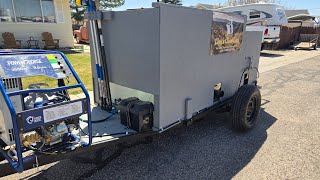 00:1703:33
 01:39
You clean and sanitize residential trash and recycling bins on a monthly or quarterly plan, and later take on HOA bin days, apartment complexes and commercial dumpster pads. Most creators started with a pressure washer, a pump sprayer and bleach or pool chlorine for under $500, found customers through Facebook groups, Nextdoor and tags on bins, and bought a trailer rig ($2,000 DIY to over $100,000 new) only once their routes were full. Profit comes from route density, meaning many subscribers in a few neighbourhoods, and from catching the dirty water and disposing of it legally. It is also called a garbage can cleaning business or bin cleaning business, and many pressure washing companies add it as a recurring service. 00:09 02:0002:4729:26
Four quick questions about the day-to-day work the creators describe.
Real US Google searches, and an example of local competition. Data from DataForSEO, 2026-11-24.
 02:3000:0636:4203:5622:51
The smallest bet is a $50–500 kit, much of which you may already own. The big risk is a trailer or truck: one host warns you lose big reselling equipment if the market isn't there. None of the 11 sources gave resale prices for rigs, so we don't show a worst-case figure. 03:0802:22
Our estimate A ~$2,000 DIY trailer ÷ ~$180 a year from one monthly customer ($15 a clean × 12, one operator's figure) ≈ 11 subscribers kept for a year, before fuel, chemicals and the ~$50 one operator spends to win each customer. A used $48,000 trailer, at that operator's ~$140 a year per customer, needs roughly 340 customer-years. 05:0208:1441:0811:2824:29
The order most creators recommend: prove people will pay, sort the water, sell plans, and buy the big rig last. Tick steps as you go; progress saves on this device.
A one-page plan filled in with this guide's figures. Swap in your own numbers and local prices.
| Services | Residential bins on monthly or quarterly plans; HOA days, apartments and commercial dumpsters later; pressure washing upsells 03:3329:2615:30 |
|---|---|
| Startup budget | $50–500 for a starter kit; ~$2,000 for a DIY trailer; $48,000+ for a purpose-built trailer 03:5600:0905:0211:28 |
| Prices | $15–25 a month on a plan; $20–40 per bin one-time 03:4912:1103:33 |
| Monthly costs | Insurance $30–60/mo; about $3 a clean in supplies for one operator; fuel and drive time are the biggest costs 22:5140:2122:26 |
| Marketing | Facebook groups, Nextdoor, tags on neighbours' bins after every job; one full-time operator spends $6,000–8,000 a year 16:5220:1310:3241:48 |
| Break-even | About 11 monthly subscribers kept for a year pay off a $2,000 DIY trailer (our estimate) |
| First goal | 15 monthly customers ($225 a month at $15), then 40–50 08:37 |
The gap between the cheapest and the most expensive setup is huge. Most creators say start small; the franchise seller says buy real equipment. 01:3901:45
| Setup | Cost | |
|---|---|---|
| Hose, $1 brush, $10 pump sprayer, bleach (hand scrub) | ~$50 | 03:2803:56 |
Electric pressure washer kit from  Home Depot | under $500 | 00:0901:14 |
| Gas washer, foam cannon, wet/dry vac (semi-pro) | $400–700 | 04:49 |
| DIY trailer: hot-water washer, IBC totes, pump, $40 spinning head, can lifter | under $2,000 | 05:0200:1704:0502:11 |
| Pro-grade trailer setup | $5,000–10,000 · $3,500–6,000 | 02:3505:41 |
| Purpose-built trailer that lifts bins over a catch tank | ~$48,000 used · ~$70,000 new | 11:2811:4208:55 |
| Trailer with water filtration and recycling | $102,000–109,000 | 09:3109:35 |
| Trash can cleaning truck | $100,000+ | 00:58 |
01:5402:0601:4501:5101:0708:1927:2305:13Every operator here sells plans, not one-off cleans. The open question is how often. 02:1704:06
| Plan | Prices quoted | |
|---|---|---|
| Monthly | $15 per bin · $25 first bin + $10 each extra · $25 for two cans | 03:4912:1119:50 |
| Every two months | $18 per bin | 03:43 |
| Quarterly | $35 for two cans · $45 first bin + $10 | 20:0212:21 |
| Twice a year | $50 for two cans | 20:08 |
| Seasonal (yard-waste bins, April–November) | — | 12:25 |
| One-time | $20–40 per bin · $65 for two cans | 03:3320:08 |
19:3022:3712:3608:1423:4923:2120:39 06:38
Water from a dirty bin carries food waste, oil and bacteria, and every serious operator here plans where it goes. Rules differ by state, county and city, so check your city's rules before your first paid job: ask the stormwater or public works office and your local wastewater treatment plant where you may dispose of it and whether hauling it needs a permit. 01:3703:13
| Method | What the sources did | |
|---|---|---|
| Catch it in tubs, then take it away | A UK pair tipped dirty water into storage tubs instead of the road and took it away at the end of each day | 01:4802:04 |
| Wet/dry vac | Used to collect runoff in strict neighbourhoods | 04:23 |
| Dirty-water tank to an RV dump station | A small-town operator empties his tank at an RV dump | 01:1501:25 |
| Trailer that lifts bins over a catch receptacle | Standard on purpose-built trailers | 08:5501:51 |
| Filter and recycle on board | Micron and carbon filters let one load of water clean 300–400 bins | 03:4204:4405:04 |
| Haul it to a treatment plant | Without recycling, one company says it would dump up to 12,000 gallons a week at $150 a dump | 06:2606:28 |
03:1303:4701:4201:3736:50 01:5304:2702:3914:44
Fuel and drive time are the biggest costs, so profit depends on how many bins you clean per mile driven. 22:2602:08
| Measure | Figure | |
|---|---|---|
| Cleans per hour inside one neighbourhood | 6–12 homes | 26:26 |
| Time per stop with a trailer | ~5–6 minutes | 00:2422:46 |
| Association day, all bins in one place | 122 bins in 3.5 hours at $22 | 28:29 |
| One 20-home neighbourhood route | 4 hours, $1,200 a month | 05:2705:29 |
| One operator's territory | ~180 square miles; driving is his biggest factor | 26:14 |
| One company's fuel bill | ~$1,600 a week | 15:07 |
08:1826:4530:0430:3917:3918:0113:0302:49Two of the sources sell franchises, so weigh their advice with that in mind. 02:4624:44
| Route in | What the sources say | |
|---|---|---|
| Start your own | From $50–500; most of the operators here started this way | 03:5600:0900:13 |
| Buy a small existing business | One operator bought a part-timer's brand, website and marketing materials, saving about $5,000 | 11:53 |
| Franchise | Sellers offer systems and equipment, and one gave franchisees existing customers; equipment loans run $1,200–3,000 a month | 02:4619:18 |
14:0713:5101:0902:51Facebook groups and NextdoorThe most-cited channel. One post brought a UK pair 60–70 messages; a US operator posts on the 1st and 15th and says customers' own posts work best
05:0616:5220:1305:01Stick a postcard or hanger on bins after collection day. Slow but steady: one operator put out ~6,000 tags for ~20 customers, often months later
04:4834:3933:45Knock or tag the neighbours while you're there. One company's “six pack”: the two houses next door and three across the street
19:3410:3204:39Free first cleans for people who will share it; HOAs that require bins in garages are prime customers
02:5504:5605:13 Google Business Profile
People search “trash can cleaning near me” when the bin starts to smell; one operator says Google leads sign up straight away
19:5433:45These are the prices creators charge. They vary by city, so test a couple of price points in local Facebook posts.
| Job | Price | Sources |
|---|---|---|
| One-time clean | $20–40 per bin · $25 first can · $35 one can · $65 for two cans | 03:3302:5611:3220:08 |
| Extra cans at the same house | +$10–15 each | 11:3202:5912:11 |
| Monthly plan | $15 per bin · $25 first bin + $10 · $25 for two cans | 03:4912:1119:50 |
| Monthly route price per home (2+ bins) | $60 | 05:25 |
| Every two months | $18 per bin | 03:43 |
| Quarterly | $35 for two cans · $45 first bin + $10 | 20:0212:21 |
| Twice a year | $50 for two cans | 20:08 |
| HOA or association day, many bins at once | $22–40 per bin | 28:2904:34 |
| Apartment complex, 30 cans | $25 per can | 09:07 |
| Add-on during a pressure washing job | $20–30 per can | 04:54 |
| Maggots or heavy odor | +$15–25 · +$10–20 odor treatment | 13:44 |
| Travel fee beyond ~25 minutes | $10–20 | 13:0302:49 |
| List-video range | $35–75 per can per cleaning | 02:51 |
04:1807:2824:4707:3704:2701:5304:2307:4824:0410:3224:1007:1302:3401:3903:0003:1404:0903:0204:0602:1703:1602:0830:3908:1825:0801:4803:1301:5136:5024:0407:4801:39• Professional equipment, not a DIY setup 01:4508:05• Quarterly fits more homes into each route 22:37The mistakes the creators say they made, ranked by how many of them mention it.
02:2200:5803:0825:0102:5113:0303:0203:1001:5304:2702:1722:2302:06Only the operators' own figures are in the chart. Franchise, valet and hypothetical figures are listed separately below.
00:2230:20* Our maths: the host's ~$140 a year per customer × 300 subscribers ÷ 12; the operator puts his net profit at about 20% and says he is profitable but no overnight millionaire. GI Bins' $4–12K “net” includes pressure washing and fleet washing as well as bins, and swings with how hard they chase leads.
06:4506:3029:4900:1300:1502:40Facebook groups and $20–40 one-time cleans.03:2803:3304:4904:3405:0205:4115:3029:2608:1902:33Real operators from the source videos. Results are as they told them.
15:2615:2611:2814:5840:5220:3903:56Facebook groups.$175 first week; six clients in two days; a $1,200/mo route in one neighbourhood03:5603:5802:5505:2909:3109:3103:1324:4430:2000:1300:1300:3705:0601:2803:1303:4706:1206:0022:2322:4314:3724:1023:2136:4222:2614:5803:08Labels show whether each speaker runs the business and whether they sell something. Dates are approximate, from YouTube's “x years ago”.
 QuoteIQ (sponsor); sells a lead-generation courseQuoteIQ; sells a courseQuoteIQ (sponsor)QuoteIQ