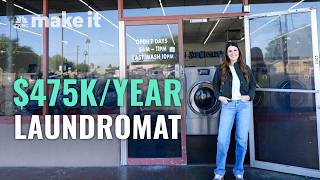
 02:5702:5703:1800:1807:18
A laundromat business means owning a store of commercial washers and dryers that people pay to use, often with wash and fold or pickup and delivery on top. Most owners buy an existing store rather than build one, and whether it makes money comes down to the price you pay, the lease and the utility bills.
No money needed yet. Older owners close to retiring are the usual sellers.  28:55
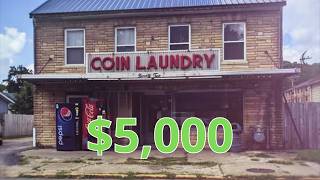 02:1902:30
Each clip opens at the exact moment on YouTube.
02:57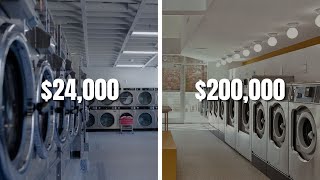 01:33
 02:1909:09
 03:43
 04:10
Most people get into the laundromat business by buying an existing store from an owner who wants out, usually with a bank, SBA or seller loan, rather than building one. You earn from self-service washers and dryers and, increasingly, from wash and fold and pickup and delivery. Owners in these videos paid $65K–300K for existing stores; one new build cost over $1M. The big running costs are rent, utilities and, if you offer full service, labor. Every owner here says it is not passive: machines break, staff call out, and someone has to respond. 02:30 03:27
 00:1103:1801:5004:5501:34
 00:41
Four quick questions about the day-to-day work the creators describe.
Real US Google searches, and an example of local competition. Data from DataForSEO, 2026-11-24.
03:2115:1716:1206:0507:1207:1901:50The money sits in machines and a lease. Used machines lose value fast: one owner's $1,100 washer is worth about $300 six years later, and a cheap run-down store can need hundreds of thousands in new equipment. No source gave a resale price for a whole laundromat, so we don't show a worst-case figure. 34:5115:0316:09
The order owners describe: decide buy or build, find a seller, check the numbers yourself, then finance and take over. Tick steps as you go; progress saves on this device.
09:30A one-page plan filled in with this guide's figures. Swap in your own numbers once you have a real store to look at. 05:01
| Model | Buy an existing self-service store; add wash and fold once it runs smoothly 26:2803:37 |
|---|---|
| Purchase price | Around 4× yearly net operating income; $95K–300K in these videos 05:01 |
| Down payment and loan | 10–20% down with a bank or SBA loan, or a seller note 05:0606:05 |
| Closing and reserve | ≈ $14K extra on a $200K deal, plus $10K for emergencies 07:1207:19 |
| Monthly costs | Rent ($1,000 at a small store; $8–9K incl. triple net at a 4,000 sq ft build), utilities (≈ $6,600/mo at one busy store), insurance (≈ $250/mo), labor 03:1030:1702:0302:0702:1503:54 |
| Prices | $4.50–9.50 per wash by machine size; $2.50–3.50 per 30 minutes of drying 00:0303:0404:1705:28 |
| Break-even | About 4 years of profit to repay the price at a 4× multiple (our estimate) |
| Marketing |  Google Business Profile, reviews and signage; $500–2,000/mo once open 21:5516:05 |
Most owners in these videos bought an existing store: it comes with customers and cash flow, and the seller will often finance part of it. Building gives you new machines and your own brand but costs far more. About 49,500 people a month search for a laundromat for sale. 26:2805:49
| Option | What the sources say | Sources |
|---|---|---|
| Build new | A 4,000 sq ft, 38-washer store cost a little over $1M; the distributor designed it, managed construction and financed about 75% | 01:5017:5101:59 |
| Buy a healthy store | $135K–300K in these videos, priced around 4× yearly net operating income | 07:1803:1805:01 |
| Buy a run-down store | $65K–100K, then $20K–30K+ of repairs; replacing all the machines can run to hundreds of thousands | 00:1100:1905:2015:03 |
| Buy with little money down | 10% down with an SBA 7(a) loan, a 6% seller note with nothing down, or a master lease with an option to buy | 07:1808:4910:14 |
| Overall range | From $15–20K for a small existing store to a few million for a large new build | 11:45 |
34:3434:3904:5105:0607:5126:4101:5402:3001:47A checklist from owners who have bought stores. Check your state and city rules for licences and permits too; none of our sources covered them. 28:55
| Check | Why | Sources |
|---|---|---|
| Turns per day | Help the seller collect for a week and count cycles per machine; about 3.5 a day is called average | 28:5514:28 |
| Utility cost per turn | Distributors can estimate water and gas per cycle; utilities can cost more than rent | 14:0513:32 |
| Tax returns and real income | Brokers may overstate income; SBA lenders want good returns | 03:1807:51 |
| The lease | Rent at 45–50% of sales can't be profitable; use a lawyer who knows commercial leases | 04:1001:06 |
| Machines and water heaters | Get an appraisal; inspect the water heaters (one failed 2–3 months in, ≈ $10K) | 34:3506:20 |
| Competition nearby | A new store next door cut one owner's volume | 16:12 |
| Insurance | Use an agent who specialises in laundromat insurance; the landlord won't hand over keys without it | 03:26 |
The three costs that decide profit, with figures from owners' own stores. 04:55
| Item | What owners report | Sources |
|---|---|---|
| Lease length | 10 years with options is the minimum for a new build; one owner signed 15 years plus two 5-year options | 03:4903:43 |
| Rent | $1,000/mo at a small run-down store; $8–9K/mo incl. triple net for a 4,000 sq ft store; 45–50% of sales is a bad lease | 03:1030:1704:10 |
| Utilities, busy full-service store | Water and sewer ≈ $1,200, electric ≈ $2,000 (summer), gas ≈ $3,400 a month | 02:0302:0702:15 |
| Utilities, smaller store | $33,000 a year on $159K revenue: water $15K, gas ≈ $8K, electric $7.7K | 03:3703:2603:21 |
| Washer lifespan | 8–10 years under heavy use; 10–15 years or more if well maintained | 02:2202:1419:02 |
| When to replace | One builder plans to refresh machines after about 10 years; old machines sell on with years of life left | 19:0819:13 |
| Water heaters | One pair has lasted 13 years after being bought used | 13:13 |
Lots of renters nearby is the number one factor for one builder; a big sign on a busy road brought people in before any marketing
02:4403:10Google Business Profile and reviewsSet it up before opening; answer bad reviews and invite the customer back
21:5525:16Customers telling friends drove awareness; about 70% of cards used each month are repeat customers
10:3036:12A makeover took one store from $159K to over $300K a year in revenue
02:1907:21Prices from one operator's store, by machine size. Bigger machines earn the most per machine. Prices vary by city, so check stores near you.
| Job | Price | Sources |
|---|---|---|
| 20 lb washer | $4.50 | 00:03 |
| 30 lb washer | $5.50 | 00:35 |
| 40 lb washer | $7.00 | 01:11 |
| 60 lb washer | $8.00 | 02:21 |
| 80 lb washer (his best earner per machine) | $9.50 | 03:04 |
| 30 lb dryer | $2.50 per 30 min | 04:17 |
| 45 lb dryer (most popular) | $3.00 per 30 min | 04:46 |
| 75 lb dryer | $3.50 per 30 min | 05:28 |
14:4232:3001:3601:4508:2426:3408:2421:0511:3010:4622:1606:4804:0905:1701:3400:4129:1201:0204:5513:3214:0503:2703:2703:3705:0326:2800:1916:0903:4904:1001:06The mistakes the creators say they made, ranked by how many of them mention it.
16:0915:0300:1504:1003:4901:06Is owning a laundromat profitable? These monthly figures come only from the owners' own stores. Bigger-company and course figures are listed separately below.
07:1802:19* The ≈ $830 is one buyer's $10,000 a year of cash flow after seller-loan payments, worked out from the seller's numbers when he bought. Cami's revenue includes pickup and delivery and table linens, and she now earns more from social media than from the store.
00:4203:3702:3000:1401:5610:2500:5826:2807:1800:1901:1704:3505:0303:3731:2604:0800:58Real operators from the source videos. Results are as they told them.
02:5702:5703:1800:1807:1800:5700:5701:5001:5920:1501:4701:4705:2006:0507:2100:1100:1100:1903:3721:0511:3316:1213:3214:0507:1305:5701:0822:3206:20Labels show whether each speaker runs the business and whether they sell something. Dates are approximate, from YouTube's “x years ago”.