 01:4901:4922:42
A non-medical home care agency sends caregivers into seniors' homes to help with daily living: bathing, meals, errands and companionship. You don't need to be a nurse, but most states regulate these agencies, families or Medicaid pay by the hour, and the real work is finding clients and keeping reliable caregivers.
No money needed yet. The licence decides your timeline, so check it first.  01:36
 03:3204:11
 04:26
Each clip opens at the exact moment on YouTube.
 10:2419:10
 01:0503:32
 04:54
 04:40
You get licensed where your state requires it, insure the business, then match trained caregivers with seniors who need help at home and bill by the hour. Families paying privately typically pay $30–35 an hour; Medicaid waiver programs pay less, and rates vary widely by state. As a senior care business you're essentially selling labour, so there's no inventory, but payroll goes out before clients pay. The owners' advice on how to start a home care agency comes down to three things: check your state's rules, keep enough cash for payroll, and build referral relationships before the licence arrives. 00:4501:3302:3020:47 10:35
Four quick questions about the day-to-day work the creators describe.
Real US Google searches, and an example of local competition. Data from DataForSEO, 2026-11-24.
01:1111:4905:1210:3719:1014:1408:38There's little equipment to resell: most money goes on licensing, insurance and payroll. The bigger risks are time and cash flow: one owner's licence took 6 months, another says expect no clients in the first month, and payroll is due before clients pay. None of the 10 videos gave exit or resale figures, so we don't show a worst case. 02:4208:5310:35
Our estimate A $10,000 start ÷ about $900–1,000 profit a month from one 80-hour-a-month client (one owner's model at $30/hr billed and $15/hr paid) ≈ 10–11 months. With five part-time clients (about $4,000 a month profit in the same model) it would take under 3 months. 10:2012:2410:0520:26
The order the owners describe: rules and cash first, clients and caregivers lined up before the licence arrives. Tick steps as you go; progress saves on this device.
One owner suggests writing even a simple business plan, especially if family or friends are helping fund you. Here's one filled in with this guide's figures. Swap in your own. 07:49
| Services | Companionship, personal care, homemaker and respite help; later a speciality such as dementia care 02:2106:36 |
|---|---|
| Startup budget | $700–10,000 from owners' own starts; a franchise is $40K–200K 10:0710:2002:03 |
| Prices | $30–35/hr private pay; Medicaid typically $23–30/hr 01:3302:30 |
| Monthly costs | Caregiver wages (~$15–17/hr) + 15–20% payroll taxes + 4–8% workers' comp; lean overhead about $2–3K/month 10:0508:1012:0311:3114:06 |
| Break-even | About 10 months with one part-time client; under 3 months with five (our estimate) |
| Marketing | Discharge planners, elder care attorneys, your own network,  Google reviews, a referral bonus 03:3204:1105:0501:13 |
| First goal | Five part-time clients, about $4,000 a month profit in one owner's model 20:26 |
Check your state's health department licensing rules before you spend money or take a client. Non-medical home care (help with daily living and companionship) is regulated differently in every state: some require a home care agency licence, some don't. Medical home health (nursing and therapy) is a separate, stricter category not covered here. Everything below is only what the owners said about their own states. It is not legal advice. 01:3600:0400:45
| Topic | What the owners said | Sources |
|---|---|---|
| Licence or not | Regulated states require a licence; owners say starting costs less in non-regulated states | 00:0401:36 |
| How long it took | One owner's licence took 6 months | 02:42 |
| Insurance | One owner needed a liability certificate of insurance to apply ($75–140/mo); workers' comp is required almost everywhere | 12:5013:2009:03 |
| Office | Some states require an office with proper zoning; others allow a home office | 02:2911:31 |
| Nurse on staff | Some states don't require one for a non-medical agency | 17:51 |
| Caregiver checks | TB tests, Live Scan fingerprinting and background checks depend on the state | 18:35 |
| Visit records | One owner says visits must be electronically verified (EVV) and software is essential | 12:54 |
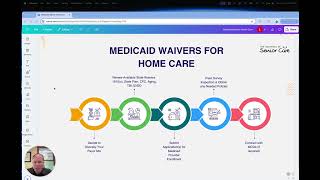
01:36Most agencies mix payers. Private pay (families, sometimes long-term care insurance) pays more; Medicaid waiver programs pay less but can bring steady clients. Waivers pay for care at home instead of a nursing home, and rules and rates are set state by state. 01:3300:1903:14
| What the owners said | Sources | |
|---|---|---|
| Private pay rate | $30–35/hr typical; net margin around 30% in one agency | 01:3306:23 |
| Medicaid rate | $23–30/hr typical; one coach cites ~$11/hr in Louisiana and Texas; net margin 9–15% | 02:3001:0506:46 |
| What waivers cover | Aging waivers (often 60+) pay for personal care, homemaker and respite services | 02:21 |
| Becoming a waiver provider | Apply to the state Medicaid office; there may be a survey separate from your licence, then credentialing with each managed care plan | 04:4005:4306:0307:38 |
| Hour caps | Some programs cap hours per client per week | 05:11 |
Owners describe three ways in. None of the 10 videos covered buying an existing home care business for sale, so we don't cover that route here. 07:21
| Path | What the owners said | Sources |
|---|---|---|
| Franchise | $40K–200K to start, plus a royalty of about 10% of revenue for the life of the business | 02:0302:41 |
| Consultant | Typically $5–15K; check that the price covers everything, not one piece at a time | 06:30 |
| Do it yourself | Cheapest on paper but slower; one owner started with $10,000 | 07:2110:20 |
| Private caregiver first | Care for one or two clients yourself, save, then grow into an agency | 05:47 |
Tell family, friends, neighbours and church that you're accepting clients and always hiring
05:0504:26Better for private pay than doctors' offices: they need somewhere safe to discharge patients
03:32Their clients often have long-term care insurance and ask them who to call
04:11One owner pays $200–1,000 to clients and caregivers who bring in a new client
00:3201:13Home care is priced by the hour. Your margin is the bill rate minus the caregiver's wage and payroll costs. These are the figures the owners gave; rates vary a lot by state.
| Job | Price | Sources |
|---|---|---|
| Private pay bill rate | $30–35/hr; $40–45 in pricier markets | 01:3301:38 |
| Example rate used by two owners | $30/hr |  00:2610:05 |
| Medicaid reimbursement, typical | $23–30/hr | 02:30 |
| Medicaid waiver, low-rate states one coach cited | ~$11/hr (Louisiana, Texas); ~$15 elsewhere | 01:0503:46 |
| Caregiver wage examples | $15/hr; $17/hr in New York (now higher) | 10:0508:10 |
| Payroll taxes on top of wages | 15–20% | 12:0308:15 |
| Workers' comp | 4–8% of payroll | 11:31 |
| One 24/7 client at $30/hr | $20,160 a month in revenue | 02:55 |
| What one client is worth over time | $10–15K, one owner's figure | 01:11 |
09:1508:1503:0822:5306:3502:2404:5406:2710:3711:4512:3915:1009:0002:4209:0007:09• At ~$11/hr you can't even hire a caregiver; focus on private pay 01:52The mistakes the creators say they made, ranked by how many of them mention it.
22:2503:0809:1502:2403:4610:3508:3810:2119:19No owner shared a real first-year profit. The rows below are two owners' models, built from their own rates and costs. Big-agency and best-case figures are listed separately.
12:2420:2621:2710:4010:24* Models, not reported results. The low end is mostly Medicaid at ~$27/hr; the high end private pay at ~$32.50/hr. Scott McKenzie's spreadsheet puts 10 clients at $14–16K a month, higher than Karl Pierre's figures, which shows how much assumptions matter.
22:4201:4905:4422:0702:5505:4719:1020:2621:2716:1704:0100:1922:0706:36Real operators from the source videos. Results are as they told them.
01:4901:4922:4210:2010:2008:3810:0710:0702:4201:4707:0907:0903:1805:4401:5206:2708:5302:4210:3505:1105:0005:4307:3816:3912:30Labels show whether each speaker runs the business and whether they sell something. Dates are approximate, from YouTube's “x years ago”.